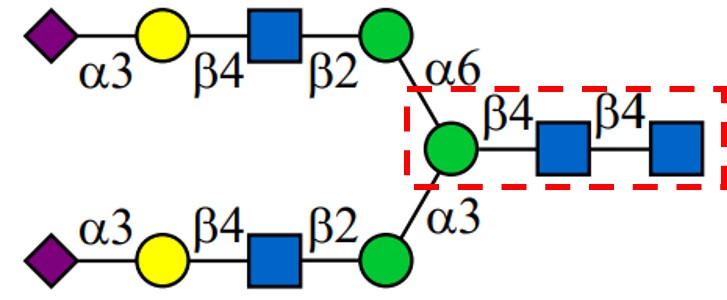
rCalsepa binds broadly to N-glycans, including high-mannose, complex, and hybrid types, by recognizing the conserved core trisaccharide Manβ1-4GlcNAcβ1-4GlcNAc (red framed). This specificity makes it a versatile glycan-binding reagent for detecting and profiling general N-glycosylation in biological samples.

Every batch of recombinant Calsepa is rigorously validated using our in-house glycan array. This ensures consistent binding specificity and reliable performance.
From: $300.00
rCalsepa is a recombinant glycan-binding lectin derived from Calystegia sepium, expressed in E. coli for high purity and consistency.
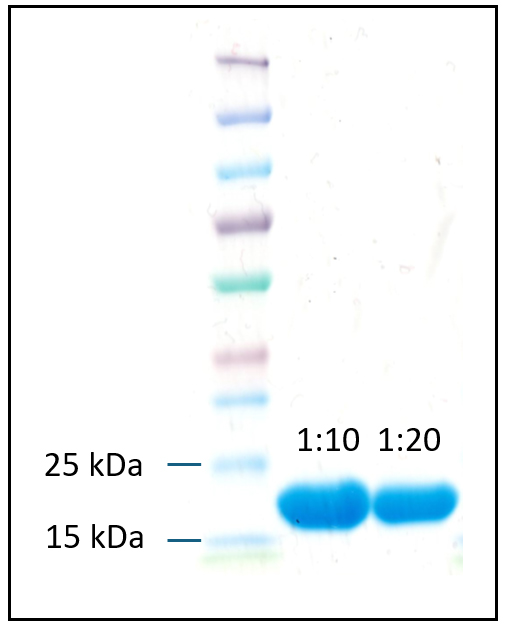
rCalsepa is a recombinant form of the lectin Calsepa derived from Calystegia sepium. The protein is based on the full-length Calsepa mRNA sequence (GenBank accession U56820.1) and was codon-optimized for expression in Escherichia coli. The expressed recombinant protein contains an N-terminal His₆ Tag. The total protein length is 162 amino acids, including the affinity tag, with a theoretical molecular weight of approximately 18 kDa. The purity of rCalsepa exceeds 95%, as confirmed by SDS-PAGE under reducing conditions. The gel shows a single, clear band between 15–25 kDa, consistent with the predicted molecular mass (~18 kDa).
rCalsepa specifically recognizes the conserved N-glycan core trisaccharide, Manβ1-4GlcNAcβ1-4GlcNAc, allowing it to bind a broad spectrum of high-mannose, complex, and hybrid-type N-glycans. This broad specificity makes rCalsepa a versatile reagent for detecting and profiling N-glycosylation patterns in various biological samples.

Applications
rCalsepa is suitable for a wide range of glycobiology applications, including:
Available in His-tagged, biotinylated, or FITC-labeled formats to suit diverse experimental needs.
Reconstitution & Format
His-tagged format is supplied lyophilized. Reconstitute in purified H₂O to a concentration of 1.0 mg/mL.
Biotinylated and FITC-labeled formats are supplied as ready-to-use liquid solutions.
Shipping & Storage
Shipped on dry ice.Upon receipt, store immediately at –20 to –70 °C.
Use a manual defrost freezer and avoid repeated freeze–thaw cycles.
Stability:
As supplied (lyophilized): Stable for 12 months at –20 to –70 °C
After reconstitution (sterile):1 month at 2 to 8 °C; 3 months at –20 to –70 °C
Reference:
Cao, X.; Wang, S.; Gadi, M. R.; Liu, D.; Wang, P. G.; Wan, X.-F.; Zhang, J.; Chen, X.; Pepi, L. E.; Azadi, P.; Li, L. (2022). Systematic Synthesis of Bisecting N-glycans and Unique Recognitions by Glycan-Binding Proteins. Journal of the American Chemical Society, 144(40), 18357–18369.
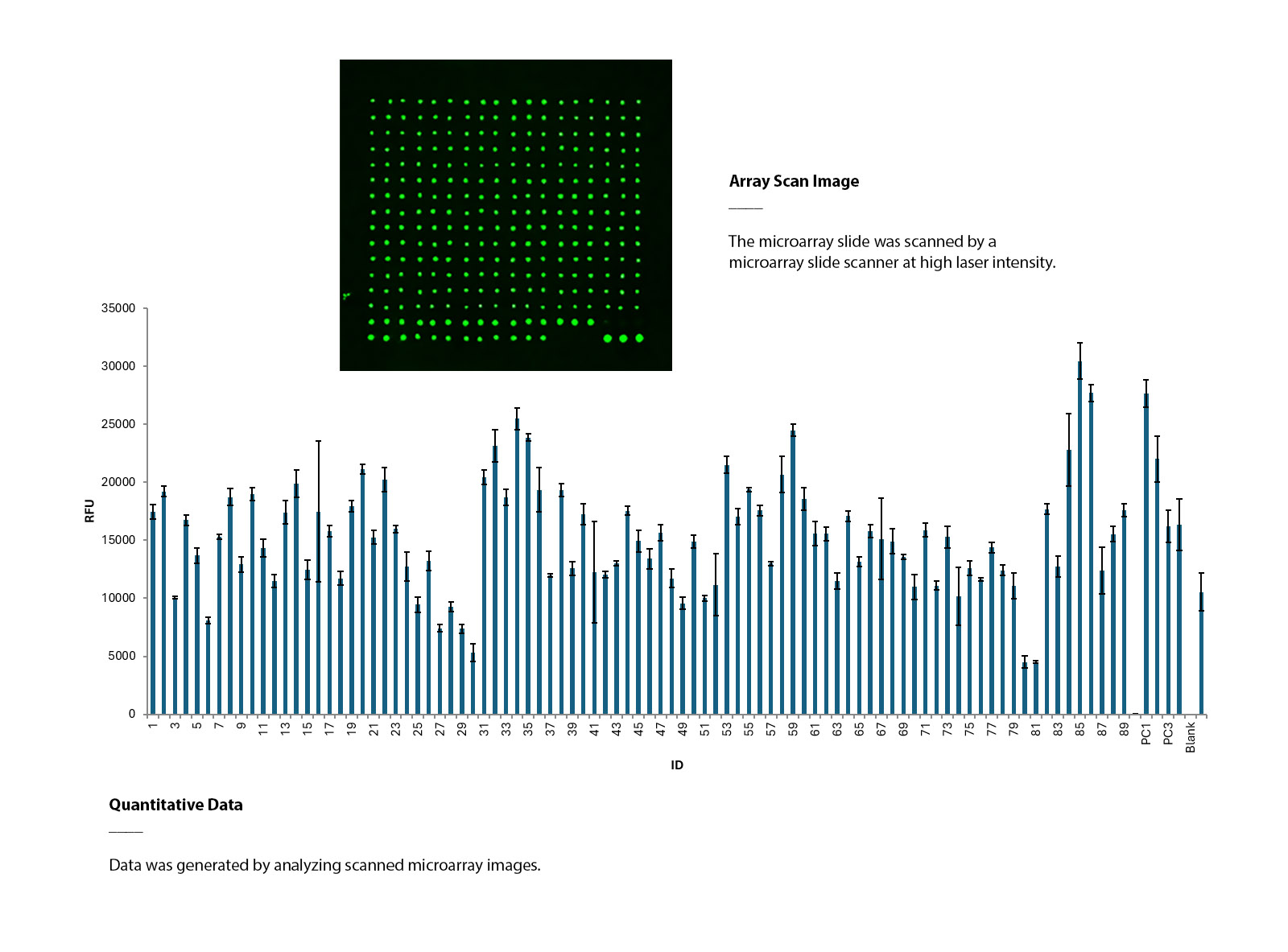
The binding activity of recombinant Calsepa (rCalsepa) was evaluated using the ZBiotech N-Glycan Array (Product Code: 10602). A concentration of 2 μg/mL biotinylated rCalsepa (Product Code: 11001B) was applied to the array and incubated at room temperature for 1 hour. After washing, streptavidin-Cy3 (0.2 μg/mL) was added for detection and incubated for an additional 1 hour, followed by a final wash step. The array was then scanned and analyzed for glycan-binding patterns.

For detailed glycan structure information, please visit our N-Glycan Array page. (Click here)
The results demonstrated that rCalsepa binds broadly to a wide range of N-glycans, including high-mannose, hybrid, and complex types. This broad recognition profile (Figure below) confirms that rCalsepa is a versatile glycan-binding reagent, well-suited for profiling general N-glycosylation in biological samples.